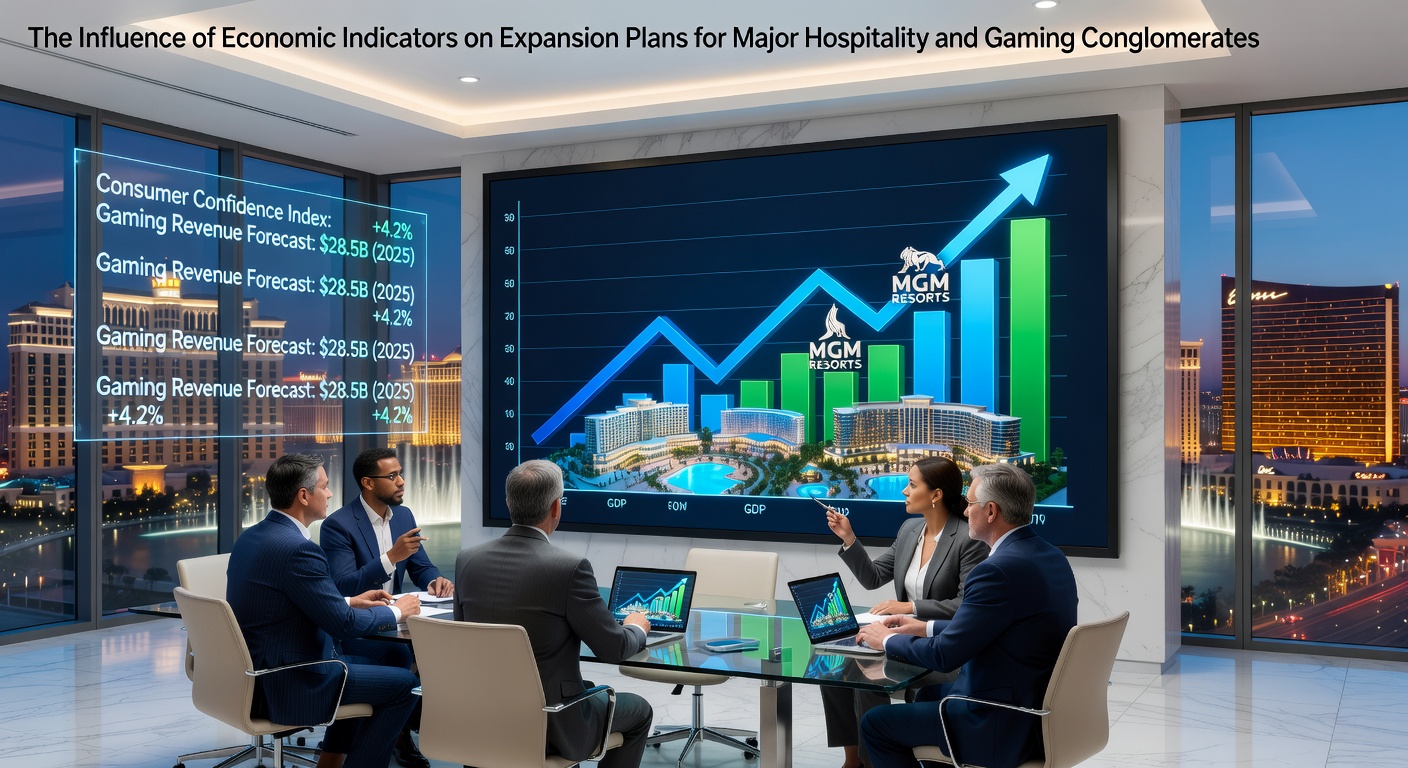
The Influence of Economic Indicators on Expansion Plans for Major Hospitality and Gaming Conglomerates
Major hospitality and gaming conglomerates track shifts in gross domestic product, unemployment rates, and consumer spending patterns before committing capital to new properties or renovations, and data from government statistical agencies guides these decisions across multiple continents.
Key Economic Indicators That Shape Decisions
Analysts at organizations such as the Organisation for Economic Co-operation and Development compile quarterly reports that highlight how rising inflation compresses discretionary travel budgets, while steady job growth in service sectors supports increased hotel occupancy and gaming revenue; conglomerates respond by accelerating or delaying projects accordingly. In regions where central banks adjust interest rates upward, financing costs climb and boards often postpone large-scale builds until borrowing terms stabilize. Conversely, periods of currency stabilization in key tourist markets encourage faster rollout of integrated resorts that combine lodging, entertainment, and gaming floors.
Take one development team at a multinational operator that monitored monthly retail sales figures released by national statistics offices; when those numbers showed consistent month-over-month gains in leisure spending, the group advanced permitting processes for a new property in a secondary Asian market. Researchers at academic institutions have documented similar patterns where leading indicators such as manufacturing output and freight volumes foreshadow broader economic momentum that later translates into stronger visitor arrivals at casino destinations.
Regional Patterns and Corporate Responses
North American operators adjust expansion timelines when the U.S. Bureau of Economic Analysis publishes revised growth estimates, because those revisions alter projected internal rates of return for new casino complexes. European hospitality groups watch harmonized unemployment data from Eurostat to gauge whether middle-income households will sustain weekend gaming trips. In Australia and parts of the Asia-Pacific, government tourism agencies publish visitor arrival forecasts that directly influence whether firms greenlight additional gaming tables or hotel towers at existing sites.

One conglomerate shifted resources from a planned European acquisition toward domestic upgrades after trade balance statistics indicated softening inbound tourism from key source countries. Another operator cited improving consumer confidence indices published by national banks when it announced phased openings of new entertainment districts in May 2026, aligning construction milestones with expected peaks in summer travel demand. These adjustments reflect ongoing monitoring rather than isolated reactions, because executives maintain dashboards that integrate multiple indicators into single planning models.
Financing, Labor Markets, and Supply Chain Factors
Access to capital remains sensitive to sovereign bond yields tracked by central banks worldwide, and firms often secure multi-year credit lines during low-yield windows to lock in funding for multi-phase resort projects. Labor availability measured through monthly employment surveys affects construction schedules, since shortages in skilled trades push back opening dates and raise overall project costs. Supply chain metrics, including commodity price indexes for steel and concrete, further determine whether modular construction techniques replace traditional building methods to control expenses.
Observers note that conglomerates diversify geographic exposure precisely because economic cycles rarely align across continents at once; a slowdown in one jurisdiction can be offset by momentum in another where retail sales and foreign exchange reserves remain robust. Industry reports from research institutions such as the National Bureau of Economic Research have tracked how gaming revenue correlates with personal consumption expenditures over multi-year periods, providing quantitative benchmarks that boards reference during capital allocation meetings.
Outlook Through Mid-2026 and Beyond
Forward-looking statements filed with securities regulators show that several major players intend to maintain flexibility clauses in vendor contracts so that work can pause if leading indicators such as durable goods orders turn negative. In May 2026, preliminary figures on service-sector output are expected to clarify whether recent tourism rebounds will persist or fade, prompting some operators to revisit square footage allocations for new gaming floors versus non-gaming amenities. Those who have studied similar cycles point out that early incorporation of macroeconomic modeling into master plans reduces the likelihood of costly mid-construction pivots.
Conclusion
Economic indicators function as navigational tools rather than deterministic forces, and hospitality gaming conglomerates integrate them into iterative planning processes that span multiple years. Government statistical releases, academic analyses, and industry datasets collectively inform timing, scale, and location choices for new developments. As global markets continue to evolve, the same disciplined approach to data review supports measured growth while limiting exposure to abrupt downturns in consumer spending or credit availability.