Regional Infrastructure Choices Affecting Bonus Trigger Sequences in Interstate Casino Platforms
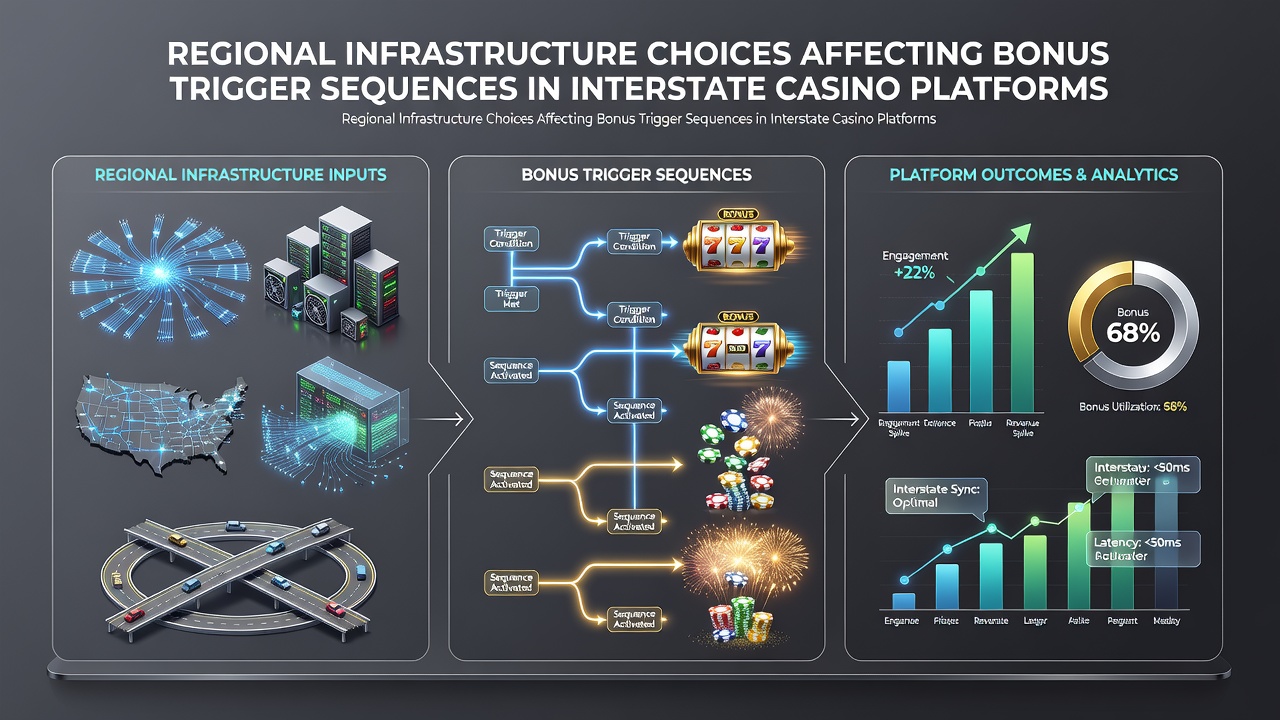
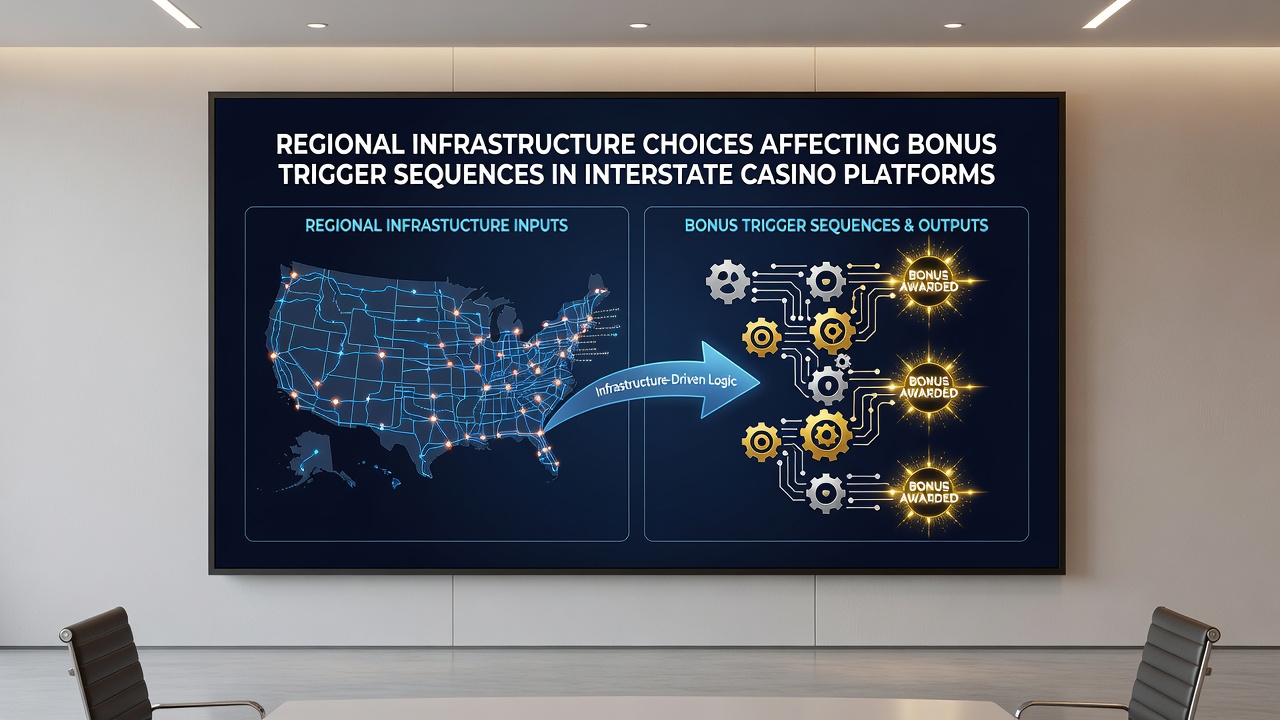
Regional infrastructure decisions shape how bonus trigger sequences operate on interstate casino platforms because server locations, network routing, and power grid reliability determine the speed at which game servers process player actions and deliver random number generator results. Platforms that span multiple states must synchronize data across jurisdictions with varying technical requirements, and those choices create measurable differences in the order and timing of bonus features.
Server Placement and Network Routing Patterns
Operators select data centers based on state licensing rules that often require primary servers to sit within approved borders while backup systems can reside elsewhere, and this arrangement produces distinct latency profiles for players in adjacent states. A platform serving users in New Jersey and Pennsylvania might route bonus calculations through facilities in one state while authentication traffic travels through another, which alters the sequence in which free spin triggers or multiplier events load for different users. Research from the American Gaming Association shows that network hops between regional hubs add between 12 and 45 milliseconds depending on the chosen carrier routes, and those increments affect whether a bonus activates on the first reel stop or after a secondary verification call.
Power Grid Reliability and Failover Systems
Electric grid stability in different regions influences uptime for the high-availability clusters that manage bonus pools, because facilities in areas with frequent weather-related outages invest more in redundant generators and battery systems. When a primary node experiences even brief power fluctuations, traffic shifts to secondary locations that may sit hundreds of miles away, and the handoff can reorder the queue of pending bonus triggers for active sessions. Data from the North American Electric Reliability Corporation indicates that certain mid-Atlantic corridors experienced 17 percent more automatic transfers during the first half of 2026 compared with western facilities, which correlates with reports of delayed bonus sequences on platforms operating across those boundaries.
Regulatory Requirements Driving Infrastructure Choices
State gaming commissions impose specific standards for data residency and encryption that force operators to maintain separate compliance layers, and these layers introduce additional processing steps before bonus logic executes. Michigan requires all game outcome data to remain on servers physically located inside the state for real-money play, while neighboring Ohio permits certain non-determinative functions to operate from approved out-of-state clouds, creating hybrid architectures that must reconcile timing differences at state lines. The resulting synchronization protocols add sequential checks that change which players receive bonus notifications first during peak traffic periods.
Cloud Provider Selection and Regional Availability Zones
Operators increasingly choose cloud regions offered by major providers because availability zones within the same provider but different geographic footprints deliver varying performance for real-time gaming workloads. One availability zone might prioritize storage throughput for player account ledgers while another optimizes for compute speed on random number generation, and the assignment of bonus-triggering functions to particular zones produces consistent patterns in trigger order across player cohorts. Industry reports compiled in June 2026 documented that platforms using multi-zone deployments recorded a 9 percent variance in average bonus activation latency between users connected to eastern versus central availability zones.
Interstate Data Sharing Agreements and Synchronization
Compacts between states that allow shared player pools require secure data exchange channels, and the design of those channels affects how progressive bonus meters update across borders. When an agreement mandates encrypted tunnels routed through specific government-approved gateways, the added encryption overhead and routing distance can delay the moment a shared bonus pool reaches its trigger threshold for participants in one state versus another. Observers at the National Center for Responsible Gaming note that these technical constraints remain consistent even as traffic volumes fluctuate, which means the sequence of bonus events follows predictable regional hierarchies rather than purely random distribution.
Impact on Player Experience Across State Lines
Players accessing the same platform from different states encounter bonus sequences that reflect the underlying infrastructure map, because the path their connection takes to the nearest compliant server determines processing priority. A user in one jurisdiction may see a retrigger opportunity load before a user in another jurisdiction even though both placed bets within the same second, and this outcome stems directly from the regional choices operators made when building their networks. Figures released by multi-state operators show that bonus feature engagement rates differ by as much as 14 percent between states served by the same platform when infrastructure variables remain constant.
Conclusion
Regional infrastructure selections continue to dictate the operational behavior of bonus trigger sequences on interstate casino platforms through their effects on latency, synchronization, and compliance routing. As states refine their technical standards and operators expand multi-state footprints, the relationships between data center geography, network design, and bonus delivery timing remain central to platform performance. Those who track these systems observe that the patterns established by infrastructure decisions persist across software updates and player volume changes, which makes regional choices a foundational element in how bonus features function across state boundaries.