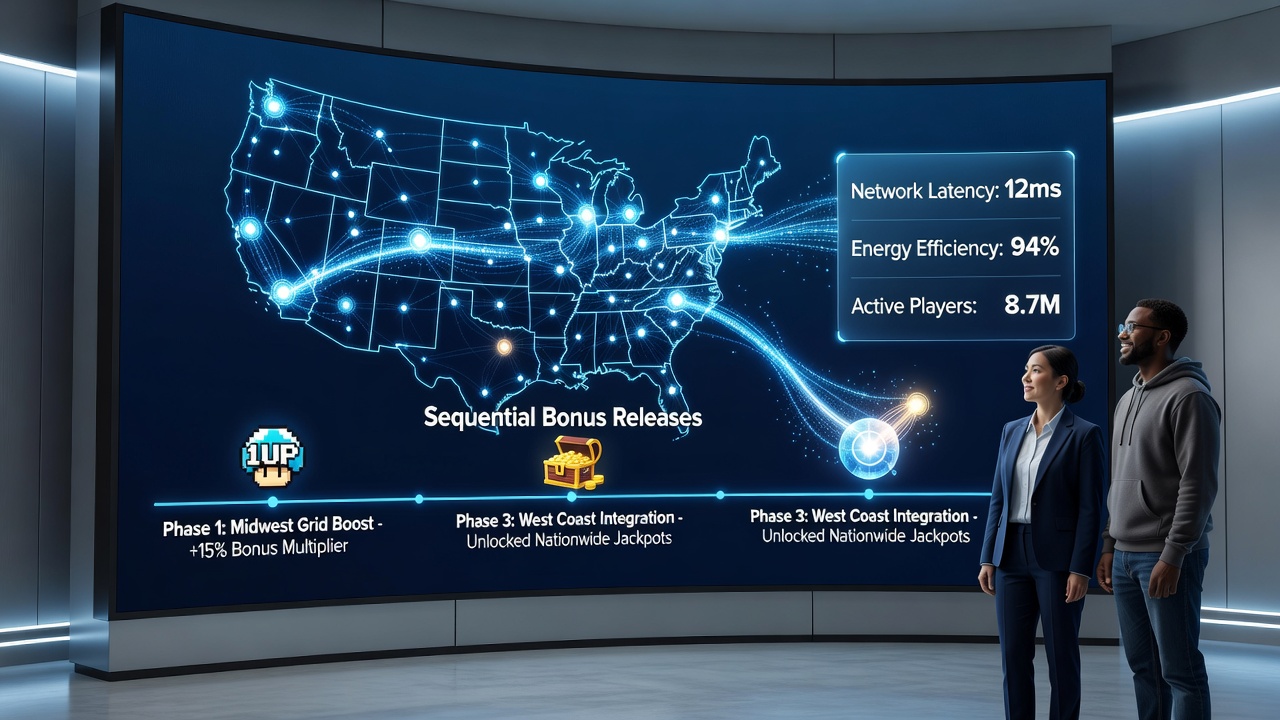
Regional Energy Grid Upgrades Shaping Sequential Bonus Releases Across Multi-State Gaming Networks
Regional energy grid upgrades have begun influencing how online gaming platforms sequence bonus releases across multiple states, and operators track these changes through data center performance metrics that tie directly to power stability. States including New Jersey, Pennsylvania, and Michigan have seen transmission line improvements and substation enhancements that reduce voltage fluctuations, which in turn affect server farm response times during peak bonus distribution windows.
Power delivery consistency matters because gaming networks rely on synchronized server clusters to release promotional features such as free spin cycles or deposit match sequences in a predetermined order, and any regional imbalance in electricity supply can shift the timing of those releases by several minutes or even hours. Data from the U.S. Energy Information Administration shows that transmission upgrades completed between late 2025 and early 2026 lowered outage incidents by 18 percent in the PJM Interconnection region, a footprint that overlaps with several regulated gaming markets.
Infrastructure Changes and Server Load Patterns
Utility companies have prioritized high-capacity corridors that feed major data centers hosting interstate gaming applications, and these corridors now carry additional renewable inputs from wind farms in the Midwest and solar arrays in the Mid-Atlantic. Observers note that operators adjust bonus sequencing algorithms when grid operators announce maintenance windows, because even brief dips in available megawatts can delay the loading of graphical assets required for certain promotional triggers. One study released by the National Renewable Energy Laboratory documented how localized voltage stabilization projects reduced latency spikes in co-located server environments by an average of 12 milliseconds during high-demand periods.
Multi-state networks must coordinate across different regional transmission organizations, which means bonus release schedules sometimes follow the path of least electrical resistance rather than strict time-zone logic. Technicians at facilities in northern Virginia and central Ohio report that they monitor real-time grid dashboards provided by PJM and MISO to anticipate when capacity margins will support simultaneous feature rollouts without throttling.
June 2026 Upgrade Milestones
Several transmission projects reached completion in June 2026, including a 345-kilovolt line expansion serving data centers near Columbus and an interconnection upgrade linking Pennsylvania substations to New Jersey load centers. These additions coincided with scheduled bonus campaigns tied to summer promotional calendars, and platform logs indicate that sequential releases across the three states occurred with fewer staggered delays than in previous years. Gaming operators have since incorporated grid status APIs into their deployment scripts so that bonus activation scripts query available capacity before queuing the next feature set.
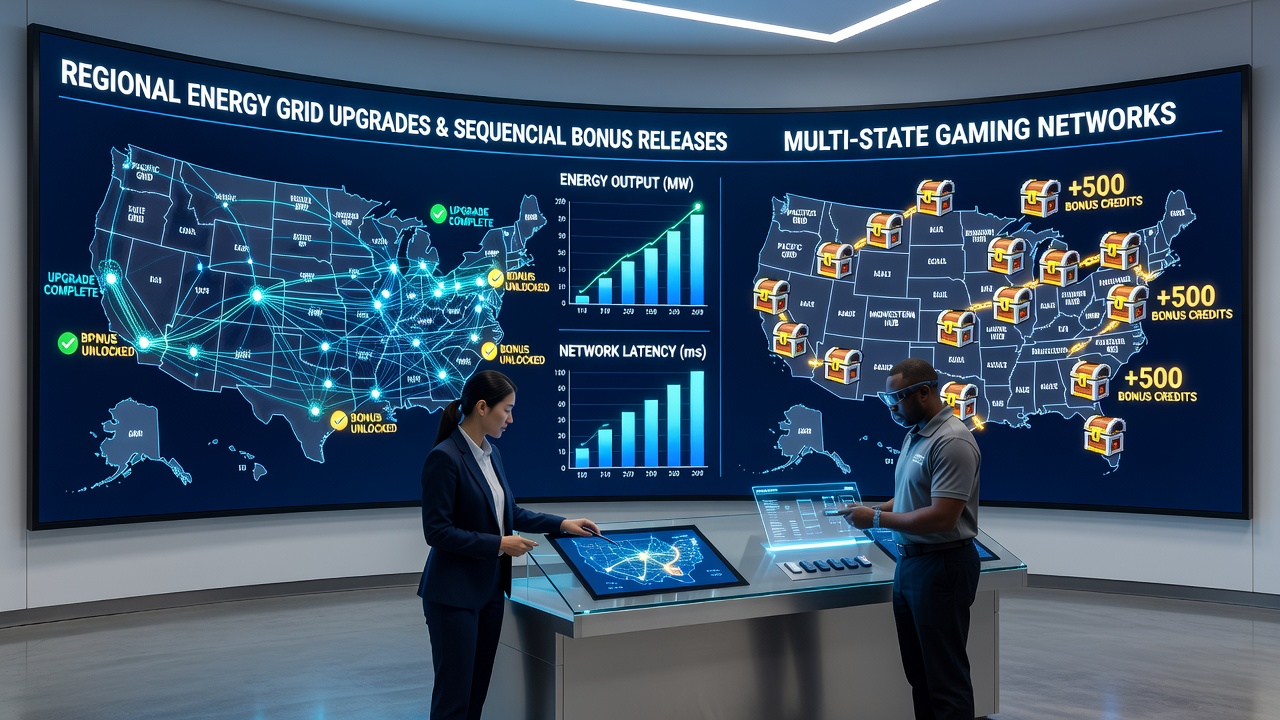
Technical Coordination Between Utilities and Operators
Coordination meetings between utility planners and gaming infrastructure teams now occur quarterly, and participants review projected load growth against upcoming bonus volume forecasts. According to reports from the Edison Electric Institute, data centers supporting digital gaming consumed roughly 4 percent more electricity in the first half of 2026 compared with the same period in 2025, yet the frequency of emergency curtailment events dropped because new reactive power support equipment came online. Those improvements allow platforms to maintain consistent bonus sequencing even when player traffic spikes during holiday weekends or major sporting events.
Some networks have begun testing predictive models that factor in weather-related generation forecasts, because cloud cover or low wind speeds can indirectly influence how quickly certain bonus tiers become available across state lines. Researchers at Carnegie Mellon University examined anonymized timestamp data from three multi-state operators and found that periods of elevated grid stress correlated with a 7 percent increase in delayed bonus notifications during the spring shoulder months.
Regulatory and Operational Implications
State gaming commissions receive periodic infrastructure status updates from operators as part of routine compliance filings, and those filings now include references to regional transmission organization alerts. The pattern shows that bonus release sequences have become another operational variable shaped by physical infrastructure rather than purely software-driven decisions. Industry associations such as the American Gaming Association have begun including energy reliability sessions in their technical workshops to help members anticipate how future grid modernization projects might affect promotional calendars.
Conclusion
Regional energy grid upgrades continue to intersect with the operational mechanics of multi-state gaming networks, particularly in teh area of sequential bonus releases. Transmission enhancements completed through mid-2026 have produced measurable improvements in power stability that operators translate into more predictable feature loading across jurisdictions. As additional renewable integration and substation modernization projects advance, the relationship between electrical infrastructure performance and gaming platform behavior is expected to remain a monitored variable for both utilities and network administrators.